Building LED screens since 2008 · ETL-certified · in stock in Toronto
P2.6mm LED video wall rental in Toronto & the GTA.
Curvable to 6° per joint. 147,456 pixels per square metre, 7680Hz refresh and 14-bit colour on ETL-certified 500 × 1000mm rental panels — flat, curved or custom-shaped, for rooms where the front row is close and the cameras are rolling. From $600 for a 1 × 2 m booth wall — panels, Novastar processing and spares included; transport, labour and technician quoted separately.
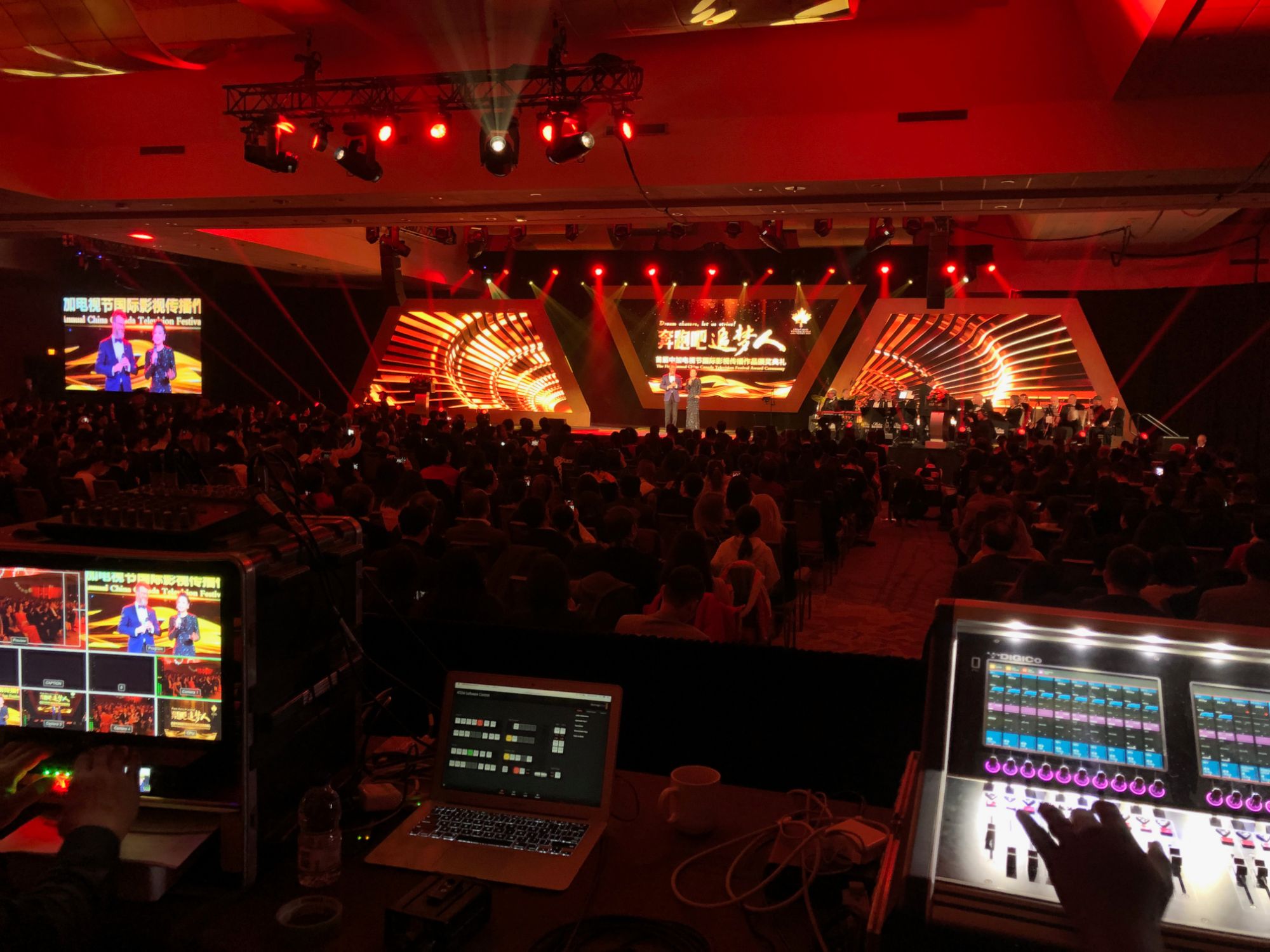
01 — Why 2.6mm
Pixel pitch is the distance your audience is allowed to stand.
P2.6mm means 2.6 millimetres from the centre of one LED to the next — 147,456 pixels in every square metre. The working rule: the pitch in millimetres is roughly the comfortable viewing distance in metres. At 2.6mm the image stays solid from 2.6 m — front-row seats, trade-show aisles, a lectern a metre off the wall.
Two things separate this fleet from older 2.6mm stock: Mini 4-in-1 LED packaging, which holds a 10,000:1 contrast ratio under stage light instead of washing grey, and headroom to 7680Hz refresh at 14-bit — the setting that makes a wall behave on camera. A 5.0 m wide build is exactly 1920 pixels across, so a 1080p master maps pixel-for-pixel with no scaling.
| Spec | P2.6mm Mini (ours) | Typical P3.9mm |
|---|---|---|
| Min. viewing distance | 2.6 m | 3.9 m |
| Pixels per m² | 147,456 | 65,536 |
| 5.0 m wide wall | 1920 px across | 1280 px across |
| Refresh rate | 3840 / 7680 Hz | 1920 / 3840 Hz |
| Colour depth | 14 bit | 12–13 bit |
| Best for | Keynotes, booths, XR | Arenas, outdoor |
02 — The panel
One 500 × 1000mm panel — straight, curved, stacked or flown.
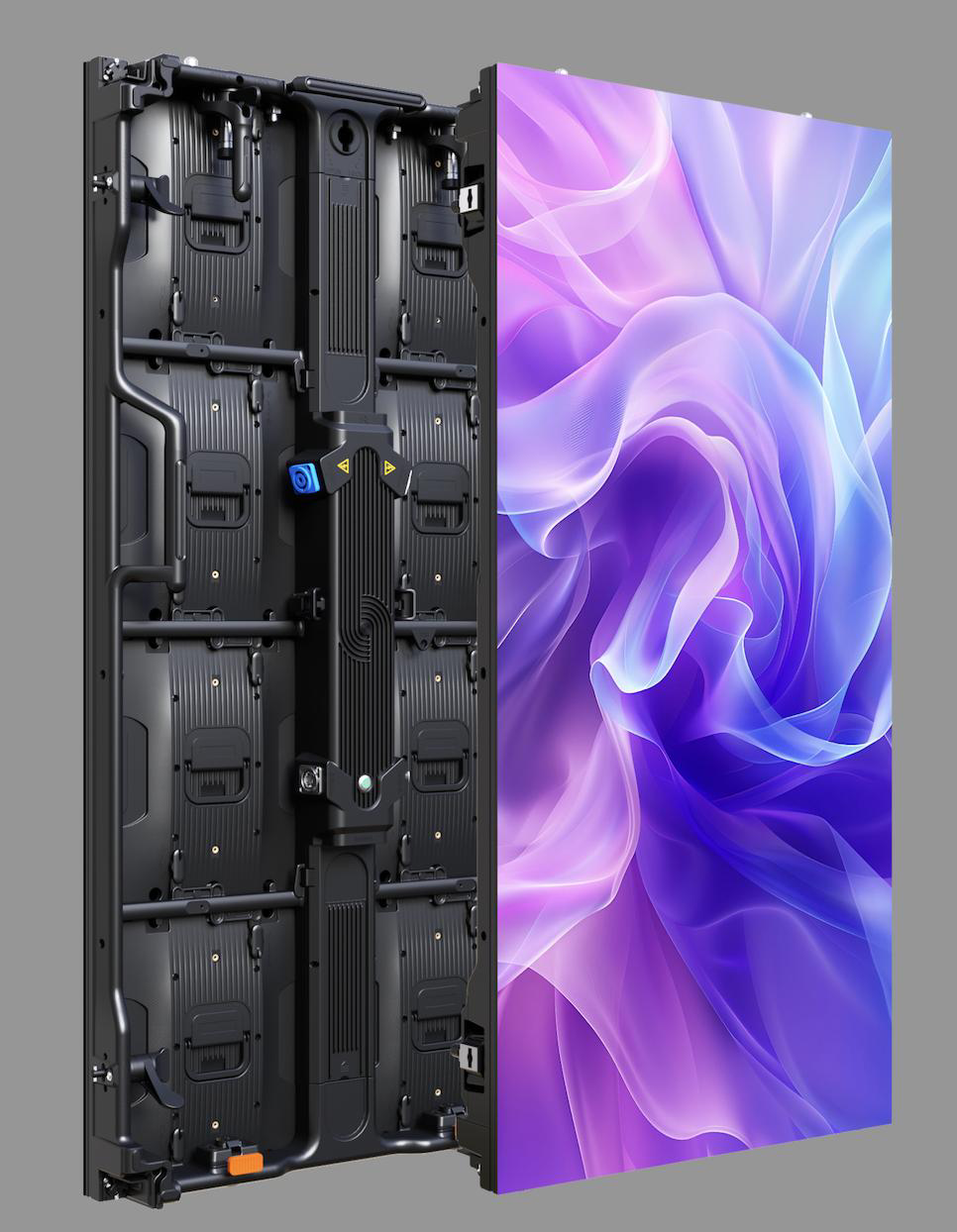
Front and back
Die-cast frame, quick-locking latches on all four edges, front and rear module access. Four 250 × 250mm modules per half.
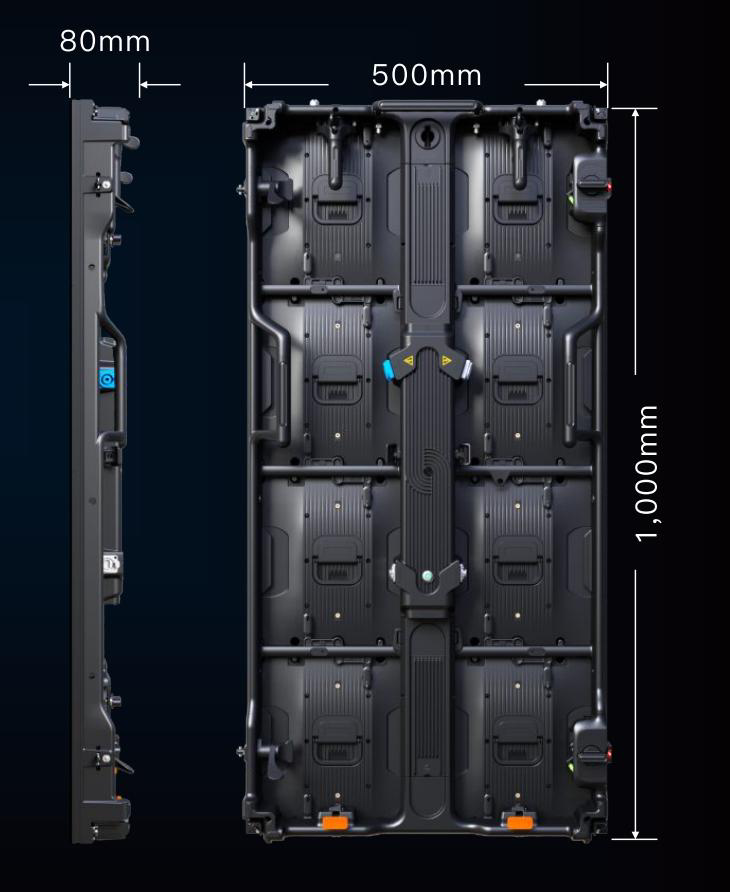
500 × 1000 × 80 mm
10 kg each, 192 × 384 px. Width grows in half-metre steps, height in metres — plot any aspect ratio without a filler panel.
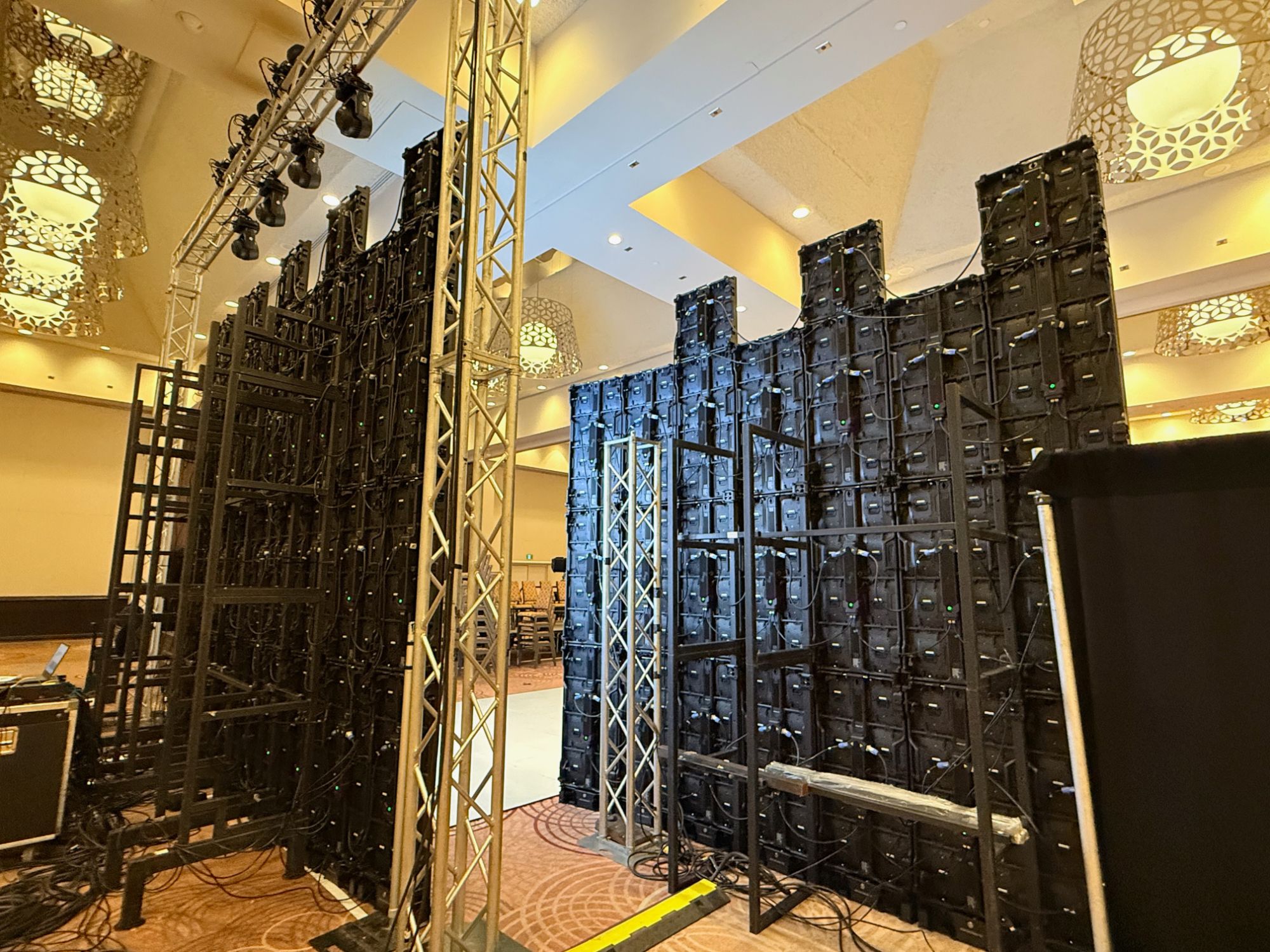
Stacked, flown or curved
Ground-support frames with base plates for ballrooms and rooms without rigging points — no holes, no rigging call — or hung from bars off truss where the venue allows it. The frame locks at up to 6° per joint, concave or convex, so the same panels build a straight wall or a curve.
03 — Configure
Pick a wall size. Get the real numbers.
Panels are 500mm wide and 1000mm high, so width grows in half-metre steps and height in metres. These four are the builds this city books most — from a single expo booth backdrop to a full ballroom mainstage. The same 120 panels also make a 21:9 banner, a portrait totem or a curve.
Resolution
Screen area
Power · avg / peak
Crew & load-in
Weight on deck
Flight cases
This build · from
Included in the starting price
Quoted separately
Final price follows the date, the load-in window and how many days the wall stays up.
Why the same wall costs less here.
The fleet is ours
120 panels and 60 m² of P2.6mm sit in our own Toronto inventory. Nothing is sub-rented from another vendor, so there is no broker margin between the panel and your quote.
The crew is ours
SPARK staff build the wall — not a subcontracted labour call. A ground-supported wall up to 30 m² is stacked, mapped and calibrated in 3–4 hours by two people.
The quote is itemised
Screen, transport, labour, technician and extra days are separate lines. Load in yourself, skip the standby tech, cut a show day — the price follows what you actually use.
04 — Spec sheet · Alpha 2.6 Mini 4-in-1
Pixel pitch
Panel
Panel pixels
Pixel density
LED packaging
Refresh
Colour depth
Contrast
Brightness
Viewing angle
Panel weight
Power avg / max
Install
Service access
Processing
Signal run
Module 250 × 250mm at 96 × 96 px · IP20 indoor · operating range −20 °C to 40 °C · sources HDMI, SDI, HD-SDI, VGA, RJ45 through the processor. Manufacturer datasheet and photometric report available for venue submission.
05 — Where it goes
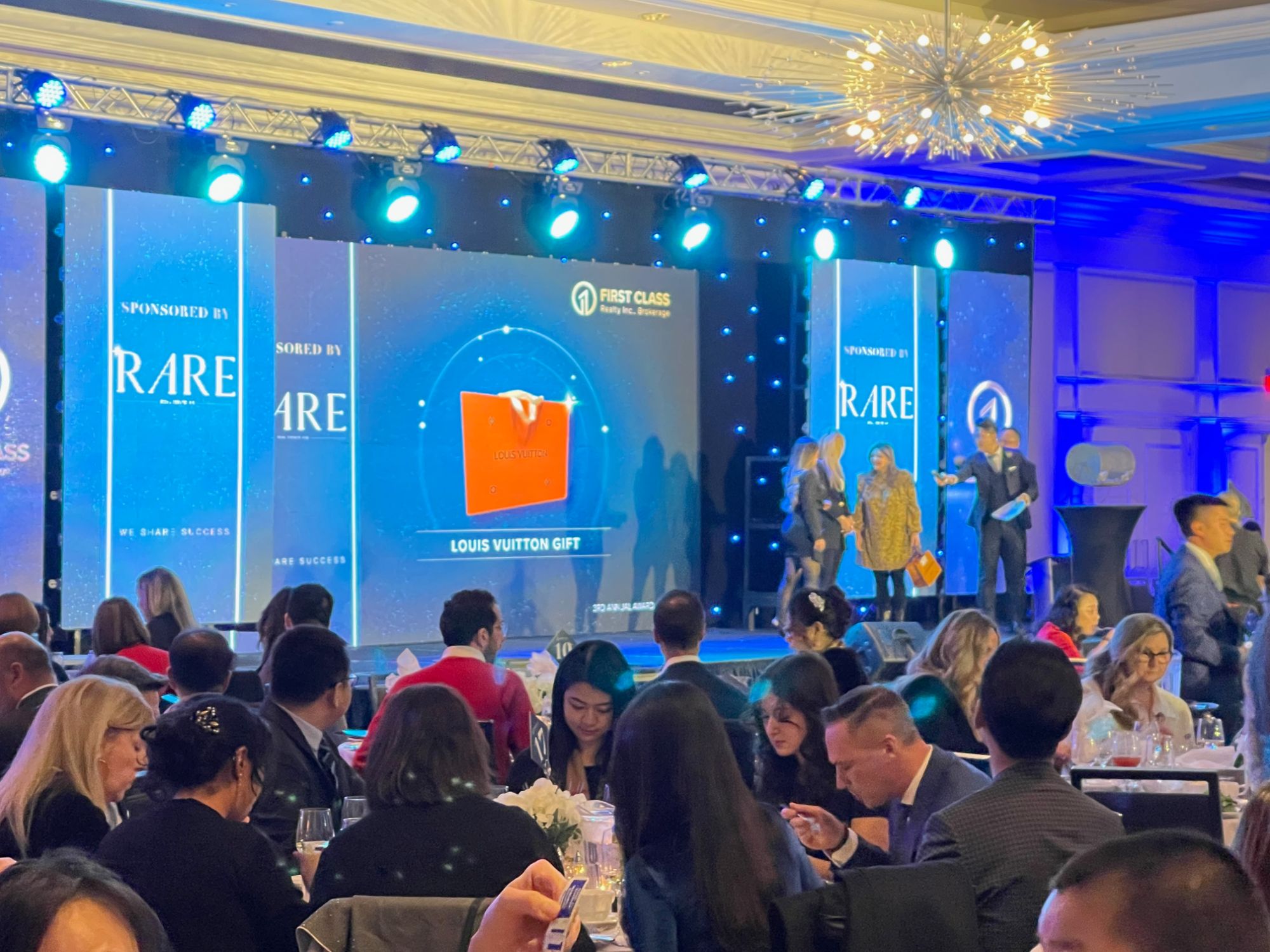
Conferences & AGMs
A 5.5 × 3 m mainstage plus portrait side panels for camera cut-ins and sponsor loops. From $2,000.
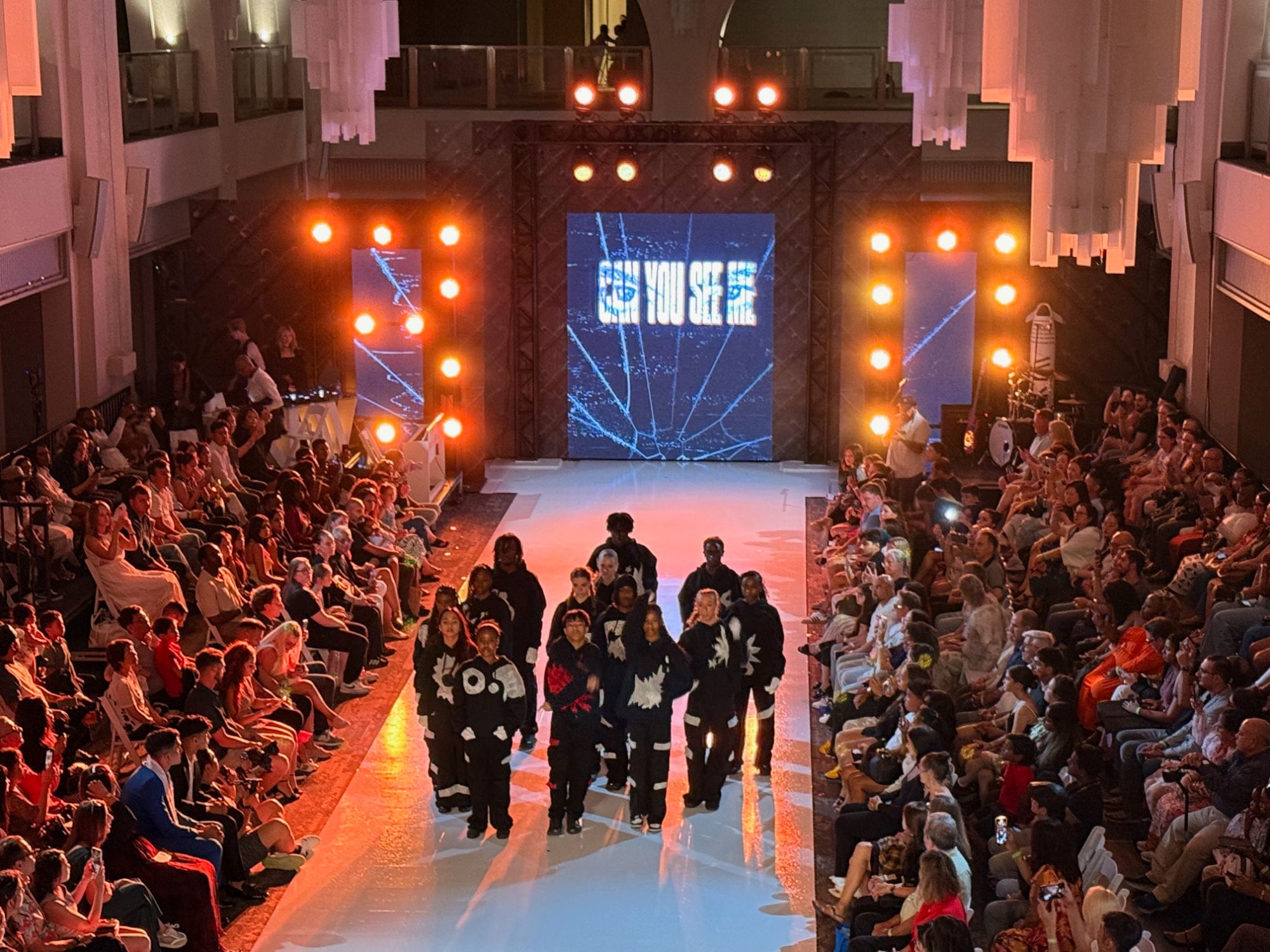
Fashion shows & runways
Front row sits a metre from the wall — exactly where 2.6mm and 10,000:1 contrast pay for themselves. Fashion show production →
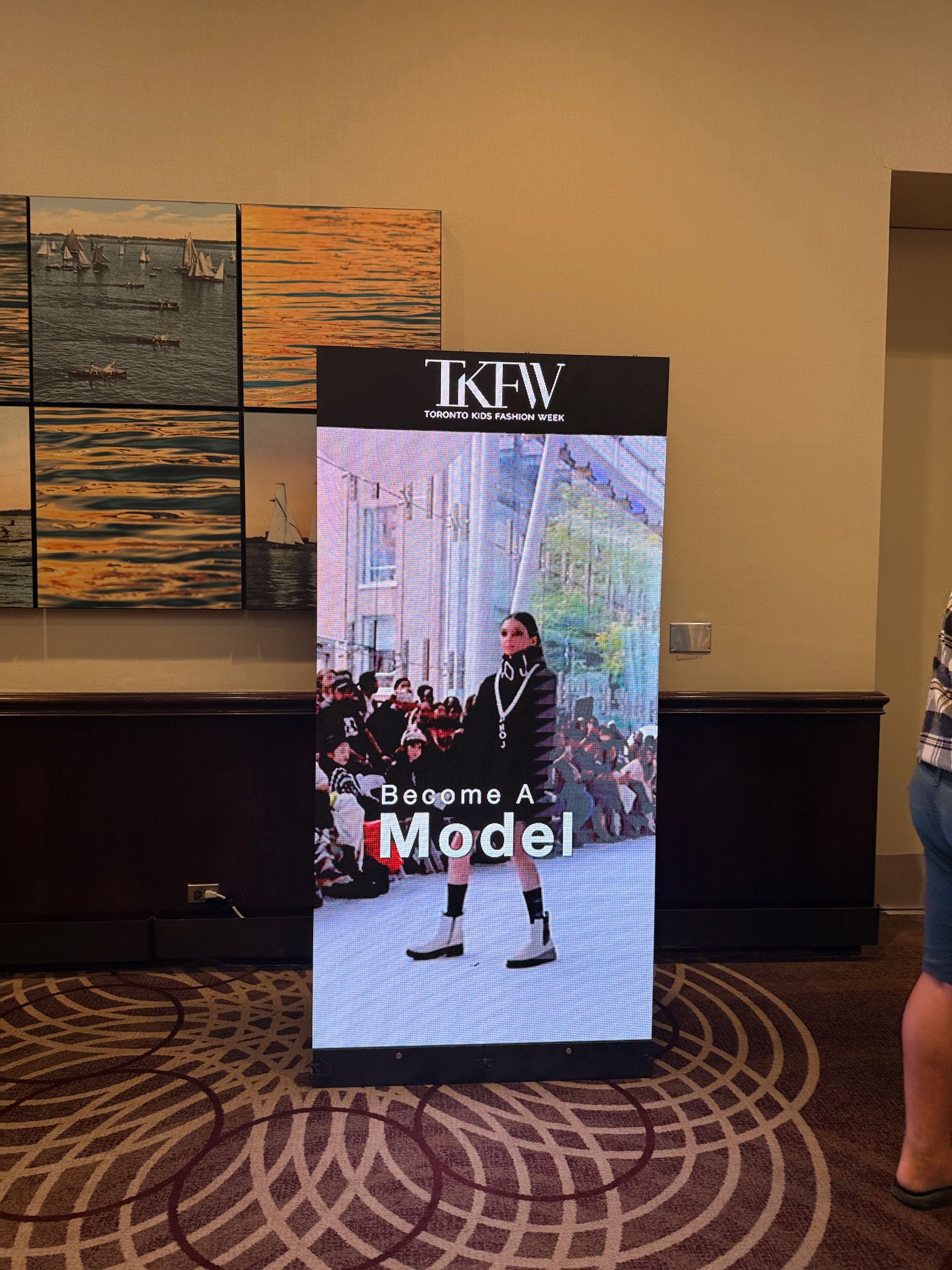
Expos, booths & live shows
A 1 × 2 m booth wall from $600 — freestanding, no rigging points. The 1 m tall panel also stacks into portrait totems for registration desks and sponsor loops.
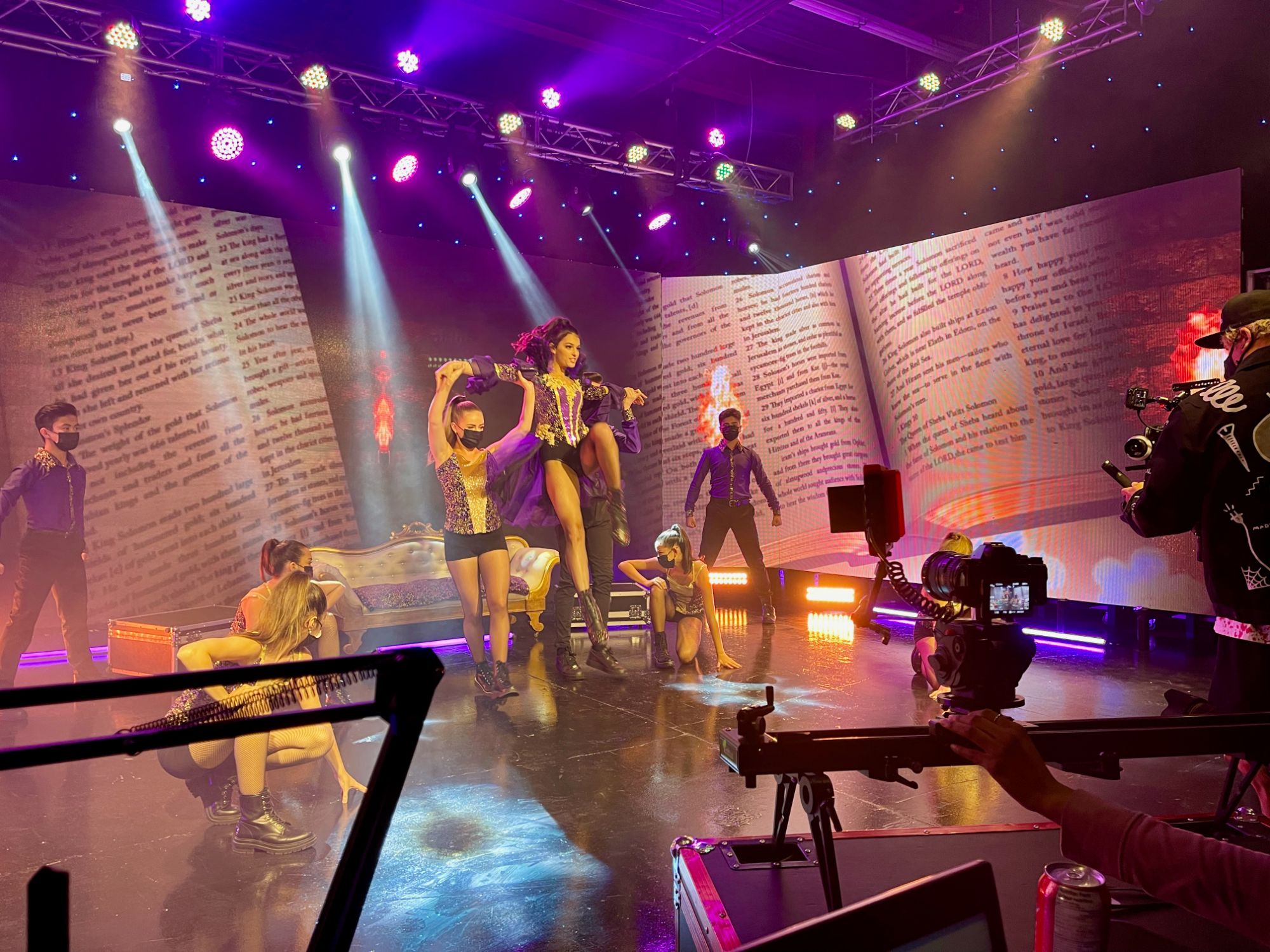
Filming & virtual sets
Angled and curved wall configurations — 6° per joint — for in-camera backdrops — 7680Hz refresh keeps the panel clean on every frame.
06 — Service area
P2.6mm walls delivered across the Greater Toronto Area.
The fleet lives in our Markham warehouse in 27 flight cases, so a truck reaches most GTA docks inside an hour and availability answers come back the same day.
Delivery included
Quoted with travel
Venues we load into regularly
07 — Straight answers
P2.6mm questions, answered plainly.
How much does it cost to rent a P2.6mm LED video wall in Toronto?
From CAD $600 for a 1 × 2 m booth wall, $1,000 at 3 × 2 m, $2,000 at 5.5 × 3 m and $3,000 at 7 × 3 m. Those cover the screen — panels, processing, spare modules and cards. Transport, install and teardown labour, and an on-site technician are quoted separately.
What does P2.6mm pixel pitch mean?
2.6 millimetres between the centre of one LED pixel and the next — Curvable to 6° per joint. 147,456 pixels per square metre. Smaller pitch lets the audience stand closer before seeing individual pixels: about 2.6 m here versus 3.9 m on a P3.9mm wall.
Is it safe to shoot on camera?
Yes. 3840Hz refresh, drivable to 7680Hz at 14-bit, removes the rolling scan lines and flicker cameras pick up on lower-refresh panels. Mini 4-in-1 packaging holds 10,000:1 contrast under stage light.
How much power does the wall need?
135 W/m² average, 450 W/m² maximum on full white. A 3.5 × 2.0 m wall averages under 1 kW and peaks near 3.2 kW — two dedicated 15A/120V circuits. Over about 15 m² plan a 208V distro, which we supply.
How fast is install?
Panels travel five to a flight case and stack on 500mm rigging bars, so a ground-supported wall up to ~30 m² is up and calibrated in 3–4 hours with two crew. Flown or curved builds need a site visit first.
Can the wall be curved?
Yes. Each panel joint locks at up to 6°, concave or convex, so a curve is built from the same panels with no special hardware — 15 panels wide gives roughly a 90° sweep. Common for concert backdrops, runway backdrops and expo booths that need to wrap a corner.
Is it right for an expo booth?
It is the best pitch for it — visitors stand a metre from a booth wall, where a coarser pitch breaks into visible pixels. A 1 × 2 m booth wall is $600, a 3 × 2 m wall $1,000, both freestanding with no rigging points needed. Transport and labour are quoted on top.
Is renting cheaper than buying?
For anything under roughly 20 show days a year, yes — by a wide margin. Buying a 3 × 2 m P2.6mm wall runs into tens of thousands, plus flight cases, spare modules, a processor, storage and crew trained to build it. Renting the same wall starts at $600 for the screen, and the spares, processing and know-how come with it.
Why is your quote lower than most in Toronto?
The fleet is owned in-house, so there is no sub-rental markup from another vendor. The install crew is SPARK staff, not a subcontracted labour call. And the quote is itemised — screen, transport, labour, technician, extra days — so you can drop a line you do not need instead of paying into a bundle.
Does the price include setup and installation?
The starting price covers the screen: panels, Novastar processing and spare modules and cards. Install and teardown labour, transport, an on-site technician, extra show days and travel beyond the GTA are separate line items, so you pay only for what your venue and schedule need.
Can you install in a ballroom with no rigging points?
Yes. Panels stack on ground support frames — no ceiling points, no drilling, no house rigging call, which is usually the single largest saving on a hotel venue. The same panels can be flown from truss where the venue allows it.
How big can the wall be?
120 panels, 60 m² total — up to roughly 9 × 5 m in one piece. Width grows in 0.5 m steps, height in 1 m steps, landscape or portrait, stacked or flown.
Can it be hung from truss?
Yes — 10 kg per panel, rated for both stacking and hanging, with front and rear service access so a flown wall can still be serviced tight against a set piece.
Do you rent outside Toronto?
Delivery is included across Toronto, Mississauga, Markham, Vaughan, Brampton, Richmond Hill, Scarborough and Oakville. Hamilton, Kitchener–Waterloo, Niagara, Kingston, Ottawa and Montréal are quoted with travel.
Tell us the room. We'll send the wall.
A date, a venue and a rough size is enough. A line-item quote and a panel layout back within 24 hours, from the person who will be on site.
No deposit to hold a date while you confirm budget.